
Meet Dr. Hong
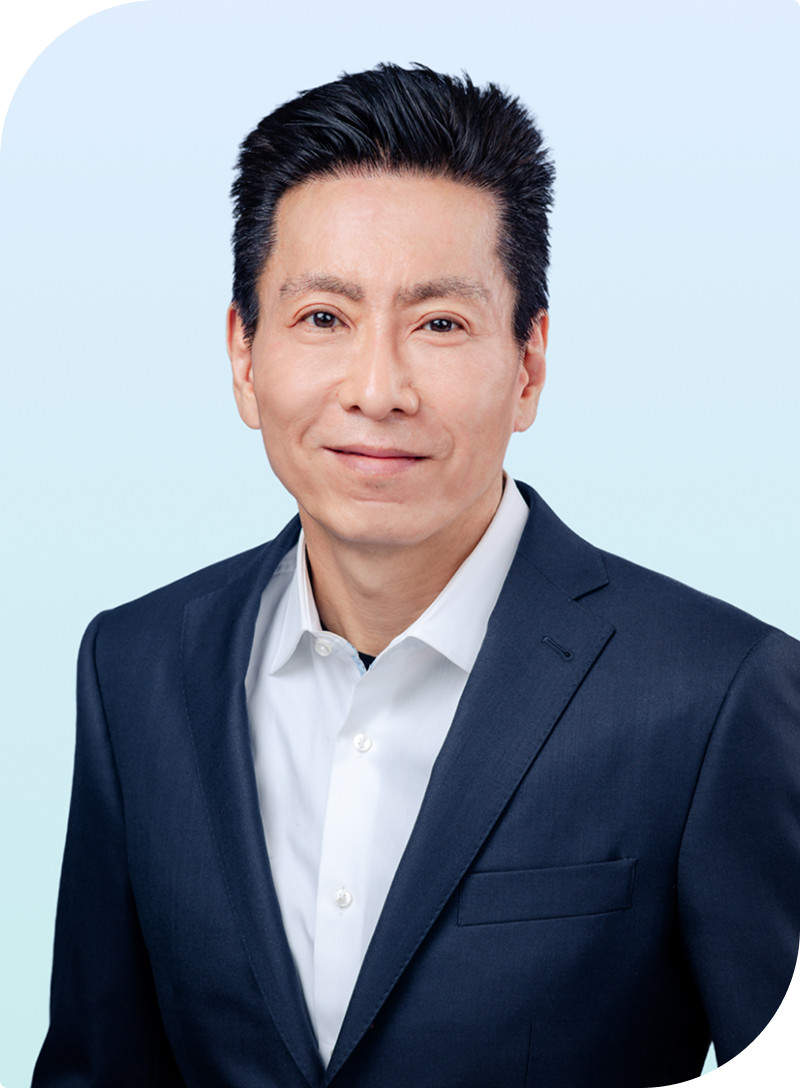
Hyun Hong, M.D.
Dr. Hyun Hong is a fellowship-trained pain management anesthesiologist, board-certified in Pain Medicine by the American Board of Anesthesiology. But his path into medicine began long before he ever entered an operating room. It began with movement — across countries, across cultures, and eventually across the boundaries of what he thought he would become.
Born in South Korea, Dr. Hong immigrated with his family to Toronto, Canada, at the age of five. Years later, another move brought him to Oklahoma City, where he graduated as valedictorian of Del City High School. As an Oklahoma State Regents Scholar, he was recognized among the state’s highest-achieving students — part of a program built to keep exceptional young minds in Oklahoma and invest in their futures.
At Oklahoma State University, he immersed himself in mathematics and biology. Numbers fascinated him. So did living systems. After only three years of undergraduate study, he earned early acceptance to Columbia University School of Dental Medicine, with plans to become an oral and maxillofacial surgeon.
Then something unexpected happened.
While in New York, he attended a lecture by the Nobel Prize–winning neuroscientist Dr. Eric Kandel. It would change the course of his career. Listening to Kandel describe the mysteries of memory, learning, and the human brain, Dr. Hong found himself pulled toward questions that had nothing to do with dentistry. The lecture revealed medicine not as a profession to be entered, but as a lifelong investigation into biology, consciousness, and human resilience.
He returned to Oklahoma to finish his degree — this time determined to pursue medicine before committing to any single specialty.
After earning his Doctor of Medicine from the University of Oklahoma College of Medicine, Dr. Hong completed an internship in Internal Medicine in Portland, Oregon, then trained in Anesthesiology — with electives in Critical Care Medicine — at the University of Washington in Seattle, where he encountered some of the most complex and demanding situations in modern medicine.
Few medical specialties bring a physician closer to the edge of human survival than anesthesiology. Dr. Hong’s training placed him at the center of some of medicine’s most demanding moments — organ transplants, complex brain surgery, and the care of critically ill patients whose hearts and lungs were kept alive by machines. What stayed with him wasn’t just the technical complexity. It was watching patients on the threshold of death return to ordinary life, and learning — in the most direct way possible — how resilient the human nervous system truly is.
Those experiences shaped a fascination with neuroscience, physiology, and recovery that has never left him.
His residency included rotations at Harborview Medical Center, Seattle Children’s Hospital, and the University of Washington Multidisciplinary Pain Center. After two years practicing anesthesiology privately, he pursued fellowship training in Pain Medicine at the Texas Tech Pain Institute in Lubbock — a program known for its pioneering work in interventional pain therapies and neuromodulation.
Today, Dr. Hong’s clinical work centers on a single goal: helping patients reclaim function and quality of life. He is drawn to neuromodulation, regenerative medicine, and alternatives to the repetitive steroid injections that define so much of conventional pain care. He follows platelet-rich plasma (PRP) and bone marrow–derived mesenchymal cell therapies closely — emerging biologic approaches that aim to support the body’s own capacity for repair. Chronic pain, he believes, is rarely just pain. It is usually entangled with inflammation, lifestyle, nervous system sensitization, and overall health, and it demands a wider lens than symptom suppression alone.
His treatment philosophy favors conservative medication management wherever possible. Medications have their place, but he works with patients toward reducing their reliance on opioids, antidepressants, anti-inflammatories, nerve medications, and muscle relaxants whenever it is clinically sound to do so. The goal is never simply a lower pain score. It is restored function, independence, and a life worth returning to.
Dr. Hong has also spent much of his career on the other side of medical knowledge — helping to create it. He has served as an investigator previously in FDA Phase II, III, and IV clinical trials, contributing to the evaluation of emerging therapies and technologies. He has part of the admissions committee process for the University of Washington School of Medicine, helping choose the next generation of physicians. And more than twenty of his former medical assistants have gone on to medical school, and more than twenty others to physician assistant, Doctor of Nursing Practice, and nursing programs — careers that began, in part, at his side.
Yet for all his respect for formal research, Dr. Hong believes that some of medicine’s most valuable insights arrive somewhere else entirely: in the exam room. He learns from remarkable patient encounters nearly every day, and not infrequently sees results striking enough to change how he cares for the next patient with the same condition.
This is why he is, at once, a firm proponent of evidence-based medicine and a clear-eyed critic of its limits. Evidence-based practice rests on randomized controlled trials and observational studies — careful, rigorous, and indispensable. But the average result of a study is just that: an average. It often says surprisingly little about the real patient sitting across from you, the one who would never have met the trial’s narrow inclusion and exclusion criteria in the first place. And there is a harder truth beneath the science. The studies that get funded are largely the studies that someone — industry, a special-interest group — can afford to pay for and stands to benefit from. A great many studies that should be done simply never are. Good medicine, in Dr. Hong’s view, requires holding all of this at once: the evidence, its blind spots, the individual patient, and a healthy curiosity about what the literature hasn’t yet caught up to.
That curiosity is most visible in his fascination with aging itself. His personal interests run toward anti-aging science and the pursuit of elite physical and cognitive performance — the lifestyle levers and medical tools that might let a person operate at their peak for longer. He is, by temperament, his own first test subject, routinely trialing novel gadgets, devices, and therapies on himself and his willing physician friends long before he would suggest them to a patient. Over the past decade, the anti-aging field has moved from the fringe to the frontier of serious medicine, and Dr. Hong has moved with it. He believes aging is not simply something to be endured but something to be treated — and that, increasingly, we are learning how to turn back the clock. (Patients curious about where this is all heading are welcome to ask him about his latest “monkey brain” thoughts on brain–computer interfaces — and to visit our Helpful Links page for articles worth reading.)
His work has been recognized repeatedly by his peers, including selection as a Top Doctor by Castle Connolly, Seattle Magazine, and Seattle Met from 2016 to 2026. But for Dr. Hong, medicine has always been two things at once: a profession and a teaching discipline. Every generation of physicians inherits what came before and owes something forward.
Away from the clinic, he reads widely, trains in strength and Brazilian Jiu-Jitsu, and follows college and professional sports. His interest in combat sports goes well beyond the stands — he serves as a ringside physician for mixed martial arts competitions and helped provide medical coverage when The Ultimate Fighter came to Seattle in 2011.
For Dr. Hong, medicine remains an endless pursuit of understanding. Every patient encounter, every discovery, every unanswered question is one more chance to learn — and one more chance to help someone live better.